Dental clinic / Rruga e Dibrës, Tirana

A dental clinic in Tirana with time for your questions.

From regular check-ups to implants and orthodontics, at Kertuka Dent every step is explained before you decide. Find us in the Tower Bridge 1 complex.

A dentist and a patient talking at a consultation table.
A calm conversation before any treatment plan.
Find your way

What brings you in?

Choose the service and time that suit you. We confirm the appointment together.

Our services

Everyday care and specialised treatment.

Open a service to see how it works, what to ask and answers to common questions. Individual advice requires a visit to the dentist.

EnamelDentinPulp
Everyday careCheck-up and professional cleaning

A regular check-up shows you where things stand today and what to do next. A professional clean removes the tartar and plaque a toothbrush cannot reach.

What the check-up looks at.

Teeth
Tooth surfaces, existing fillings and early signs of decay.
Gums
Bleeding, inflammation and signs that need closer attention.
Bite
How your teeth meet, and whether there is wear or discomfort.

How the visit works.

  1. A short conversation. Tell us what concerns you, when your last visit was and anything you have noticed.
  2. Examination. The dentist checks your teeth and gums and explains what they see.
  3. Professional cleaning. Removal of tartar and plaque, as needed after the examination.
  4. Next step. Get home-care advice and, if needed, a plan for further treatment.

Questions worth asking.

  • How often should I come for a check-up in my case?
  • Are there areas I should clean better at home?
  • Does anything need treatment now, or can it wait?
  • What can I do about sensitivity or bleeding gums?

Frequently asked questions

How often should I have a check-up?
It depends on the health of your teeth and gums. The dentist recommends the right interval after examining you.
Does a professional cleaning hurt?
Most people feel only mild discomfort. If your teeth are sensitive, tell the dentist at the start so the treatment can be adapted.
I have not seen a dentist for years. Where do I start?
With a check-up. You do not need to arrive “prepared”; the dentist starts from where you are today.
Everyday careFillings and root canal treatment

When decay or a crack damages a tooth, the treatment depends on how deep the damage goes. The dentist explains your options after the examination.

How deep the damage goes changes the treatment.

Enamel
The hard outer layer. Early damage is often treated with a filling.
Dentin
The layer beneath the enamel. Decay here can cause sensitivity.
Pulp
The soft tissue inside the tooth. When it is affected, root canal treatment may be needed.

The usual steps of treatment.

  1. Diagnosis. An examination and, if needed, an X-ray show how much of the tooth is affected.
  2. Options. The dentist explains whether a filling is enough or root canal treatment is needed, and why.
  3. Treatment. The affected area is cleaned and the tooth is sealed with a suitable material.
  4. Follow-up. After root canal treatment, the tooth may need a crown to protect it.

Questions that help you decide.

  • How deep has the decay reached?
  • Is a filling enough, or do I need root canal treatment?
  • How many appointments will it take?
  • Will the tooth need a crown later?

Frequently asked questions

When is root canal treatment needed?
Usually when the pulp inside the tooth is affected. Only an examination can show this; pain alone is not enough for a diagnosis.
Can I postpone treatment?
Some treatments can be planned, others cannot. Ask the dentist what the risk of waiting is in your case.
I am in severe pain right now. What should I do?
Call the clinic directly. Do not wait for a reply to an online request for an urgent problem.
Everyday carePeriodontics (gum care)

Gums that bleed, look red or recede deserve attention. Periodontics deals with the tissues that support your teeth: the gums and the bone.

Three parts of the same picture.

Tooth
The visible crown and the root that sits beneath the gum line.
Gum
The soft tissue that surrounds and protects the neck of the tooth.
Bone
The support that holds the tooth in place.

How care is planned.

  1. Assessment. The dentist checks your gums, any bleeding and how well your teeth are supported.
  2. Cleaning. Removal of tartar and plaque above and, if needed, below the gum line.
  3. Home care. Practical advice on brushing and cleaning between your teeth.
  4. Review. A follow-up visit shows how your gums are responding.

Questions about your gums.

  • Why do my gums bleed when I brush?
  • Are there signs of recession or bone loss?
  • How should I clean between my teeth?
  • How often should I come back for a review?

Frequently asked questions

Is it normal for gums to bleed?
Frequent bleeding should not be ignored. It can be a sign of inflammation; a check-up finds the cause.
Does smoking affect the gums?
Yes, smoking is linked to gum problems. Tell the dentist so it can be taken into account in your plan.
Can receding gums grow back?
It depends on the case. The dentist explains what can be done and what a realistic goal for treatment is.
Everyday careChildren’s dentistry (paediatric dentistry)

First visits shape how a child sees the dentist. We look after baby teeth and permanent teeth and give parents practical advice.

What children’s care includes.

Getting familiar
Time to get used to the room, the chair and the dentist.
Check-up
Baby teeth, teeth coming through and signs of decay.
Advice
Tips on brushing, diet and habits that affect the teeth.

How to prepare for the visit.

  1. Talk calmly. Explain to your child that the dentist will “count and look at” their teeth.
  2. Choose the time. Book at a time when your child is usually not tired or hungry.
  3. Meet the clinic. Your child can see the chair and the instruments before the check-up starts.
  4. Plan ahead. Get advice for home and for the next visit.

Questions parents often ask.

  • When should my child have their first check-up?
  • Do baby teeth with decay need treatment?
  • How can I help my child brush properly?
  • How do sweets and drinks affect the teeth?

Frequently asked questions

Should I stay with my child during the visit?
Yes. Children come with a parent or guardian, who also receives the advice for home.
My child is very scared. What can I do?
Let us know when you call. The visit can start with just getting to know the clinic and a chat, without treatment.
Do baby teeth need to be treated?
Often yes, because they affect eating, speech and the teeth that come after them. The dentist assesses each case.
Specialised treatmentDental crowns and bridges

A crown covers and protects a damaged tooth. A bridge replaces one or more missing teeth by resting on the neighbouring teeth.

Crown or bridge?

Crown
Covers a weakened or broken tooth, or one that has had root canal treatment.
Bridge
Fills the gap of a missing tooth, supported by the teeth either side.
Material
Chosen according to the tooth’s position, function and the look you want.

Cases from the clinic

Missing teeth replaced with a zirconia bridge.
Before and after: zirconia bridge.
Before and after: porcelain bridge.
Before and after: zirconia bridge on the front teeth.

Photos of cases treated at the clinic, published by Kertuka Dent. Every case is individual: your result depends on the dentist’s assessment.

From consultation to finished crown.

  1. Assessment. An examination of the tooth and the teeth around it, with an X-ray if needed.
  2. Preparation. The tooth is shaped and impressions are taken for the restoration.
  3. Temporary crown. If needed, the tooth is protected until the final restoration is ready.
  4. Fitting. The fit and bite are checked before the final cementation.

Questions that shape the decision.

  • Why is a crown or bridge recommended in my case?
  • Which material do you recommend, and why?
  • How many visits will it take?
  • How do I look after the restoration every day?

Frequently asked questions

How long does a crown last?
It varies with the material, your bite and your care. Nobody can guarantee it precisely; regular check-ups help.
Are the neighbouring teeth affected by a bridge?
The supporting teeth are usually prepared. The dentist explains this and the alternatives, such as an implant.
Can I know the cost in advance?
After the consultation you can ask for a detailed written estimate for the proposed work.
Specialised treatmentDental implants

An implant consultation shows whether this option suits your circumstances. Understand the surgical part, the restoration and the ongoing care before you decide.

The 3 parts of an implant.

Implant
The part placed in the bone to support the replacement tooth.
Abutment
The connector between the implant and the visible crown.
Crown
The replacement tooth, shaped according to the plan.

Cases from the clinic

Placed implants, before the restorative stage.

Photos of cases treated at the clinic, published by Kertuka Dent. Every case is individual: your result depends on the dentist’s assessment.

A sequence built around your assessment.

  1. Assessment. Discuss your goals, oral health, medical history and the records needed.
  2. Comparing options. Review the alternatives, possible stages and the cost of each.
  3. Placement and healing. If you choose an implant, confirm the surgical plan and healing reviews.
  4. Crown and maintenance. The crown is fitted and you receive cleaning and review instructions.

Bring the questions that affect your decision.

  • Which options are suitable for me, and why?
  • How many stages, and how much time, will it take?
  • What does the detailed estimate include?
  • What happens if the plan or timing changes?

Frequently asked questions

Is an implant suitable for everyone?
No. Suitability depends on an individual assessment. The dentist explains the factors and the alternatives.
Can I know the final price before the consultation?
An accurate estimate depends on the proposed plan. After the assessment you can ask for the detailed cost of each stage.
How long does the whole process take?
It depends on the bone, healing and whether extra procedures are needed. The dentist gives you an indicative timeline after the assessment.
Specialised treatmentOrthodontics

Orthodontics deals with the position of the teeth and how they meet. Treatment is planned after an assessment and needs your cooperation throughout.

What is taken into account.

Tooth position
Rotated teeth, gaps or overlapping teeth.
Bite
How the upper and lower jaws meet.
Oral health
Teeth and gums need to be healthy before treatment starts.

Cases from the clinic

Before and after orthodontic treatment.
Before and during treatment with fixed braces.
Fixed braces during treatment.

Photos of cases treated at the clinic, published by Kertuka Dent. Every case is individual: your result depends on the dentist’s assessment.

How treatment progresses.

  1. Assessment. Examination, photos or X-rays as needed to understand your bite.
  2. Plan. Discuss the options, the approximate duration and your role during treatment.
  3. Active treatment. The appliance is fitted, with periodic reviews for adjustments.
  4. Keeping the result. After treatment, the dentist explains how the new position is maintained.

Questions about orthodontic treatment.

  • Which type of appliance is recommended for me, and why?
  • Roughly how long will treatment take?
  • How often are reviews needed?
  • How is the result kept after treatment?

Frequently asked questions

Is it too late for orthodontics as an adult?
Many adults have orthodontic treatment. Suitability depends on the health of the teeth and gums, so it starts with an assessment.
At what age should a child be seen?
Ask the dentist at a regular check-up. Some bite problems are best assessed early.
Do braces hurt?
After fitting or adjustments you may feel some pressure for a few days. The dentist tells you how to ease it.
Specialised treatmentTeeth whitening

Whitening can lighten the natural colour of your teeth. Beforehand, the dentist checks your teeth and explains what result is realistic for you.

Before whitening, a check-up.

Natural shade
Everyone has their own shade; whitening works on top of it.
Fillings and crowns
They do not change colour like natural teeth; this needs planning.
Sensitivity
Some people feel temporary sensitivity; the dentist advises how to manage it.

Cases from the clinic

Before and after laser whitening.
Before and after teeth whitening.
Before and during whitening, with the gums protected.

Photos of cases treated at the clinic, published by Kertuka Dent. Every case is individual: your result depends on the dentist’s assessment.

How it works.

  1. Check-up. The dentist makes sure your teeth and gums are ready for whitening.
  2. Cleaning. A professional cleaning is often recommended before whitening.
  3. Whitening. Treatment is carried out with the method the dentist recommends for you.
  4. Afterwards. Advice on food, drinks and keeping the result.

Questions before whitening.

  • Am I a candidate for whitening?
  • What happens to my existing fillings or crowns?
  • How do I manage sensitivity?
  • How long does the result last, and how do I keep it?

Frequently asked questions

Does whitening damage teeth?
When it is done after a check-up and following the dentist’s instructions, the risks are managed. Temporary sensitivity is possible.
How white will my teeth get?
Results vary from person to person. The dentist gives you a realistic expectation after the check-up.
Do fillings whiten too?
No. Fillings and crowns keep their colour, so they may need to be planned after whitening.
Specialised treatmentCosmetic dentistry

The shape, colour and harmony of your teeth can be improved in several ways. At a consultation you discuss what you would like to change and which options are suitable.
What you can discuss.

Colour
Whitening or other solutions for stains and discolouration.
Shape
Corrections for rough, chipped or irregularly shaped teeth.
Harmony
How the teeth look together, with your lips and face.

Cases from the clinic

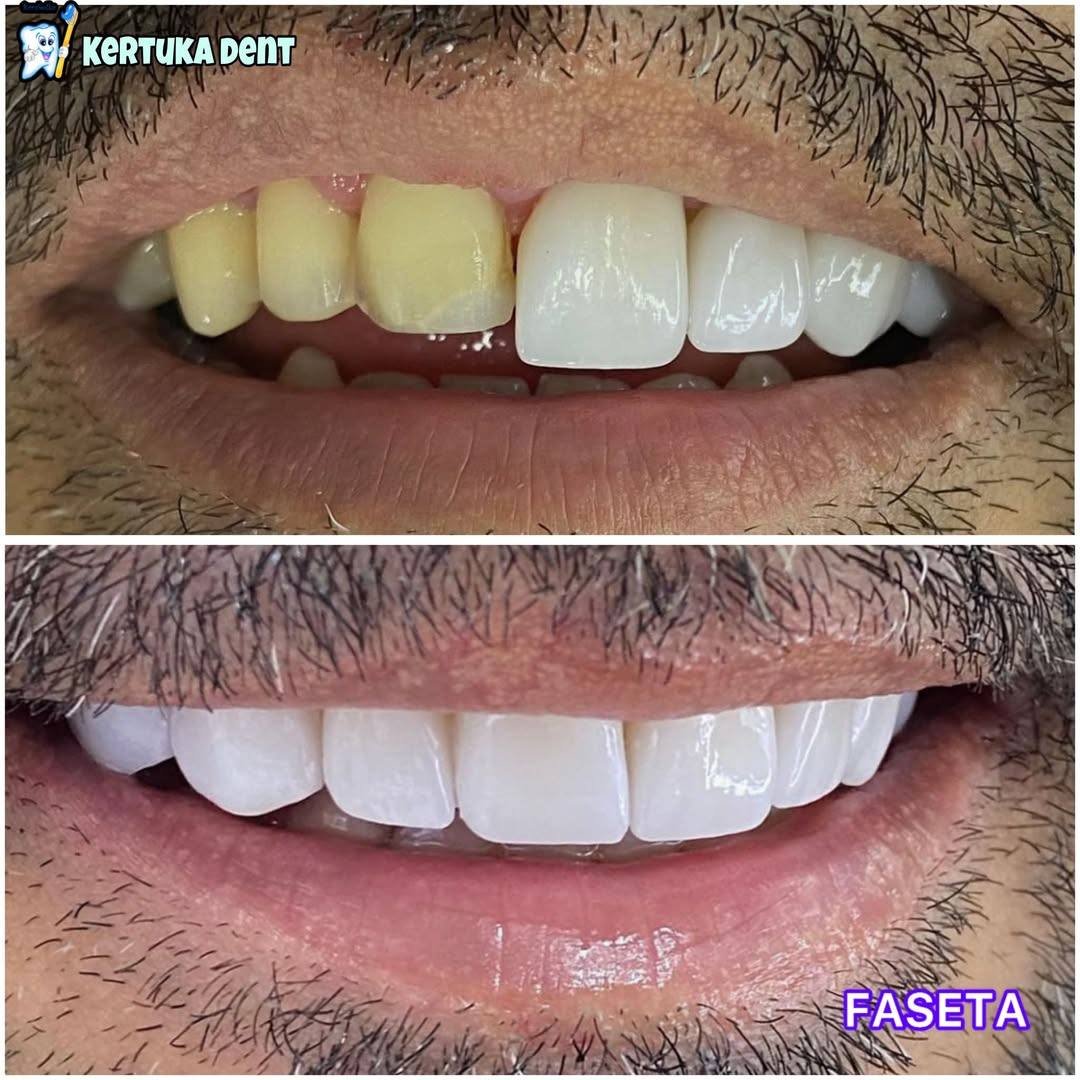
Before and after: veneers.
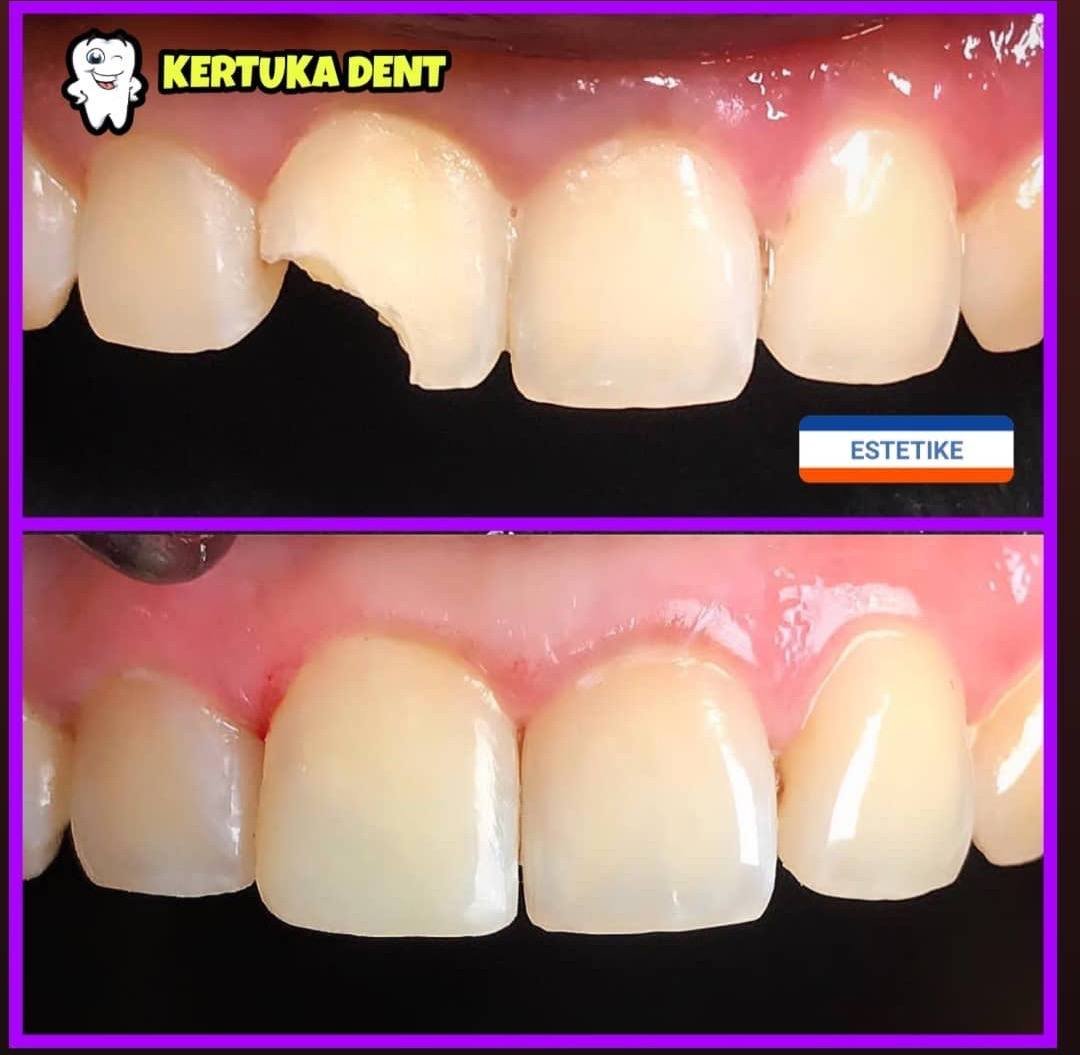
A chipped tooth restored with cosmetic treatment.
Emax veneers.
Emax veneers.

Photos of cases treated at the clinic, published by Kertuka Dent. Every case is individual: your result depends on the dentist’s assessment.

From wish to plan.

  1. Conversation. Tell us what you like and dislike about your smile.
  2. Check-up. The dentist assesses your teeth and gums before any cosmetic treatment.
  3. Options. Review the possible solutions, their benefits, limits and cost.
  4. Treatment. The work follows the agreed plan, with follow-up checks.

Questions that help you decide.

  • Which options are least invasive in my case?
  • How much does treatment affect my natural teeth?
  • How do I look after the result?
  • What does each option cost?

Frequently asked questions

Can I see what the result will look like?
Ask the dentist how the result is planned and presented before treatment.
Is cosmetic treatment permanent?
Many restorations have a limited lifespan and need care and check-ups. The dentist explains what to expect.
Where do I start if I do not know what I want?
With a consultation. Tell the dentist what bothers you and they will explain the options.
Our team

Meet the person behind your care.

At Kertuka Dent you will be seen by Dr. Gerald Kertuka. Your questions are the starting point of every visit.

Your first visit

Know what to expect before you arrive.

  1. Start with your questions

    Tell us what you would like to understand and what would help you feel more comfortable.

  2. We build the picture together

    The dentist explains the examination and any X-rays needed before discussing treatment.

  3. Leave with a clear next step

    Talk through priorities, timing and expected costs before you decide.

Your visit at a glance Questionsto bringComfortTimingCosts Next stepsto discuss1Priorities2Options3Next visit

Bring questions, not expectations of perfection.

A first conversation can start wherever you are today, even after a long break from the dentist.

Questions welcomeA plan you understand
A waiting area with natural light.
A little more at ease

There is room to take it at your own pace.

If visiting the dentist makes you nervous, tell us. Small conversations make the experience more manageable.

Tell us what helps.

You can ask to talk before sitting in the chair. Share the practical details that would make the visit easier.

Agree on a pause signal.

Ask the dentist how to signal that you need a break, before the examination begins.

Ask for an explanation.

Say how much detail you would like before each part of the visit. You can ask questions at any time.

Plan a calmer visit
A parent and child talking with a dentist before the visit.
A first visit can simply begin with getting to know the place.
For every stage of life

Dental care for the whole family.

A child’s first questions, a teenager’s changing routine or your own return to the dentist each deserve their own conversation.

Start with children’s dentistry and ask how visits can be coordinated for several family members.

Before treatment

Make room for the conversation about cost.

Understand the proposed treatment, the alternatives and the questions to ask before you decide.

Your plan
Ask which parts are a priority, what the alternatives are and how treatment could be split into stages.
The estimate
Ask for a written estimate for the proposed treatment, broken down by stage.
Your decision
Take time to review the estimate and payment terms before agreeing to treatment.
FAQ

Clear answers before you come in.

Choose a topic to see the questions patients ask most often.

Have another question?

Call or message us. We are happy to help.

Booking and your first visit

How to book and what to bring.

How can I book a visit?

Call the clinic or send a request from the booking page. Your appointment is only booked once the clinic confirms it with you.

What should I bring to my first visit?

Your questions, a list of any medicines you take and, if you have them, X-rays or records from previous treatment.

I have not been to a dentist for years. Is that a problem?

Not at all. The visit starts from where you are today. You do not need to “prepare” before coming.

Can I bring my child?

Yes. Children come with a parent or guardian, who also receives the advice for home.

Is the visit held in English?

The clinic’s everyday language is Albanian. Please ask when you book whether your visit can be held in English.

Costs and estimates

How to talk about cost before you decide.

Can I know the price before the visit?

An accurate price depends on the examination and the proposed treatment. After the assessment you can ask for a written estimate.

Can treatment be split into stages?

Often, yes. Ask the dentist which parts are a priority and which can be planned for later.

What should the estimate include?

Every proposed procedure, the approximate number of appointments and any possible extra costs, such as X-rays or follow-up visits.

During and after treatment

Questions about comfort and care.

I am afraid of the dentist. What can I do?

Tell us when you call. You can start with a conversation, agree on a signal to pause, and ask for an explanation before each step.

Will it hurt?

That depends on the treatment. The dentist explains what to expect and how discomfort is managed before starting.

When should I come back for a check-up?

The interval depends on your situation. The dentist recommends it after the examination.

Emergencies

When and how to get in touch straight away.

I have severe pain or swelling. What should I do?

Call the clinic directly. Do not wait for a reply to an online request. In a medical emergency in Albania, call 127.

I have knocked out or broken a tooth. What should I do?

Call the clinic straight away for advice. If there is another injury or bleeding that does not stop, seek urgent medical help.

Your next visit

Let’s find your next step.

Tell us what you would like to discuss and when suits you. The clinic confirms the appointment with you. Prefer to talk? Call +355 69 967 6398or message us onWhatsApp.

  1. 1Service & time
  2. 2Your details
  3. 3Review

For an urgent dental problem, call directly. Do not wait for an online reply. Call the clinic.

Contact and location

Call, message or visit us.

Rruga e Dibrës, Kompleksi Tower Bridge 1

Behind Police Station No. 4, Tirana

Directions
Google Maps only loads when you ask for it, so the page stays fast and free of trackers.

For an urgent dental problem

Call the clinic directly. Do not wait for a reply to an online request. In a medical emergency in Albania, call 127.

Call the clinic
Address
Rruga e Dibrës, Kompleksi Tower Bridge 1, Tirana, Albania
Landmark
Behind Police Station No. 4
Social media
Instagram · Facebook

Plan your visit

Monday – Sunday
08:00 – 20:30
Appointments
Confirmed by the clinic

Please confirm the opening hours and your appointment by phone before you travel.

The clinic is based in Tirana and its everyday language is Albanian. When you book, please ask whether your visit can be held in English.